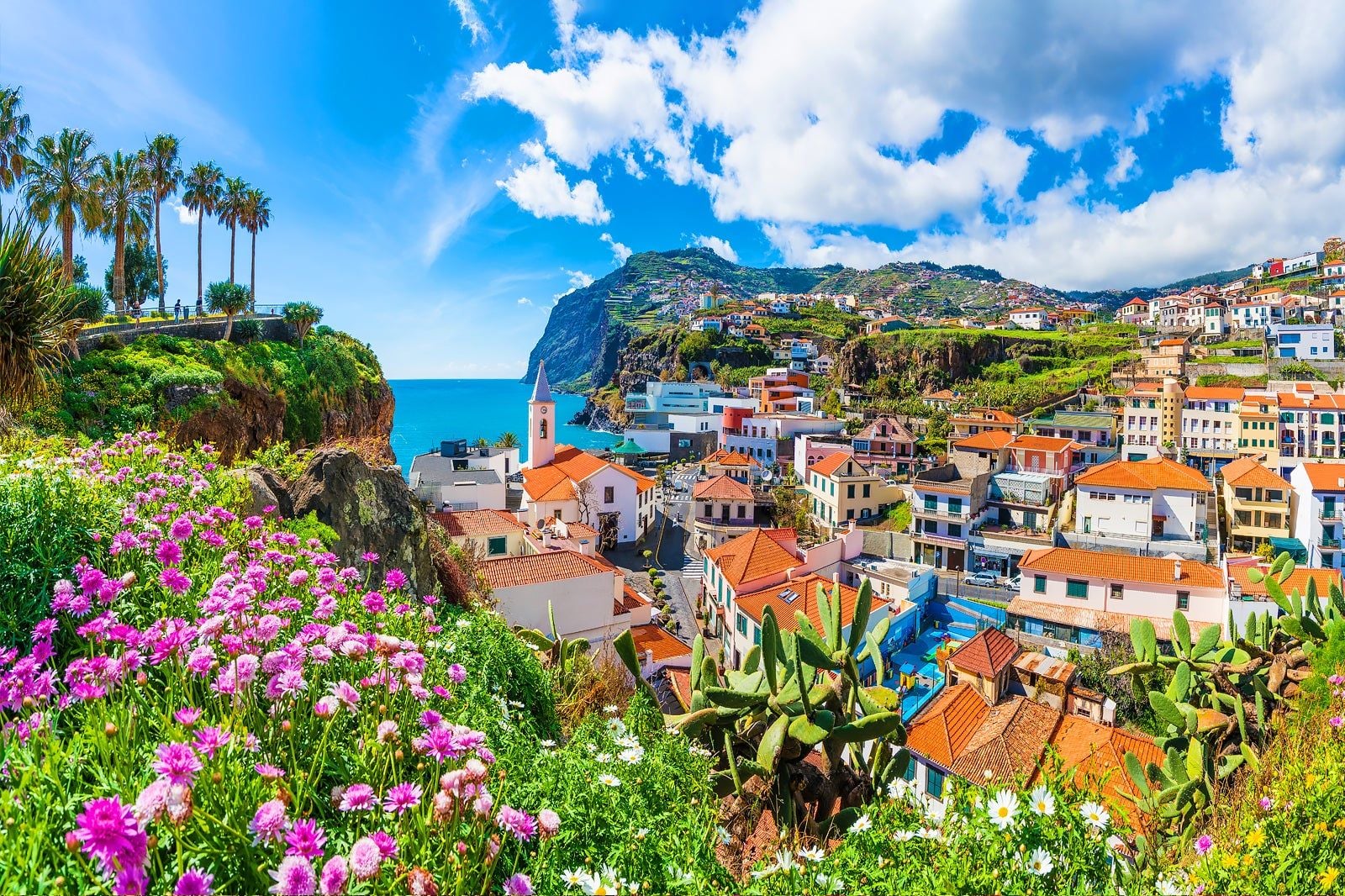
Madeira is a mountain that happens to be in the ocean.
That sounds facile, but stand anywhere on the island and it's the truest description you'll find. Peaks rise to 1,862 metres at Pico Ruivo. Valleys drop vertically into the sea. Roads tunnel through cliffs because there is no other way to get from one coastal village to the next. The whole island is volcanic, subtropical, and surprisingly green for somewhere that sits off the coast of Morocco.
The island was uninhabited until 1419, when Portuguese sailors arrived and, according to legend, set fire to much of the laurel forest to clear farmland. The fires reportedly burned for seven years. What remained of the laurisilva is today a UNESCO World Heritage site, a living fragment of the primeval forest that once covered much of southern Europe. It is one of the reasons botanists and hikers keep coming back.
The levadas define the walking experience here. These narrow irrigation channels were carved into cliff faces over centuries to carry water from the wet north to the dry south of the island, and their maintenance paths have become one of the best hiking networks in Europe. Some are easy, some involve dark tunnels and exposed ledges that should not be attempted by anyone with a fear of heights.
Funchal, the capital, holds the wine, the old town, the Mercado dos Lavradores, and the cable car up to Monte. The wine alone is worth attention. Madeira was the favoured drink of the American Founding Fathers, and the Declaration of Independence was toasted with a glass of it. Today the old wine lodges still do tastings that rival anything in Porto.
Come for the hiking, stay for the food, and leave with at least one bottle of ten-year-old Sercial in the suitcase.