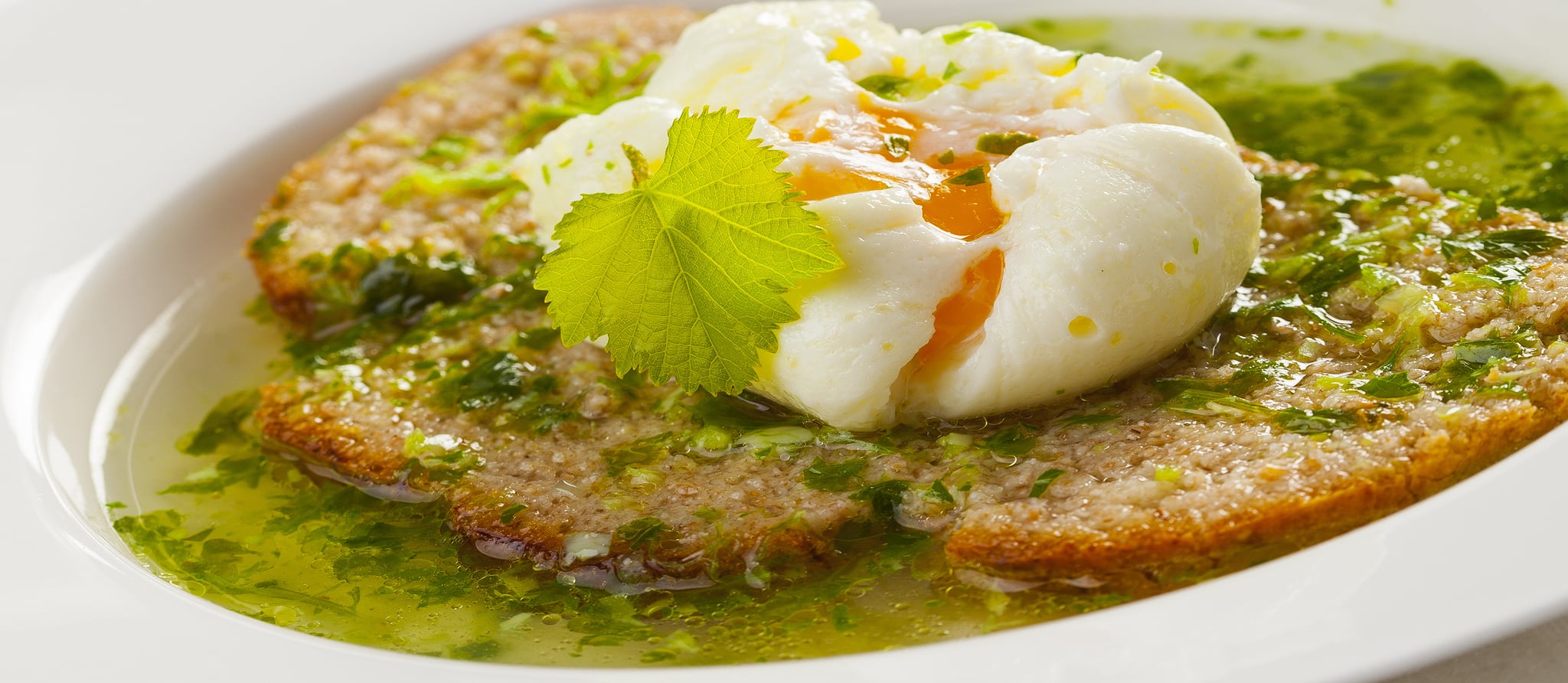
Açorda Alentejana
Açorda Alentejana is a traditional Portuguese bread soup that embodies the essence of Alentejo's rustic cuisine. This deeply satisfying dish transforms humble ingredients—stale bread, garlic, cilantro, olive oil, and eggs—into a rich, porridge-like soup that has sustained generations of Portuguese families. The dish represents the ingenious Portuguese approach to zero-waste cooking, turning day-old bread into a nourishing meal.
The origins of açorda trace back to Portugal's Arab occupation from the 8th to 13th centuries, with the name itself deriving from the Arabic 'ath-thurda,' meaning bread soaked in broth. In the Alentejo region, this dish became particularly beloved as a hearty meal for agricultural workers, providing sustenance during long days in the fields. The traditional preparation often includes a poached egg on top, creating a complete protein-rich meal that exemplifies the resourcefulness of Portuguese peasant cuisine.
Today, Açorda Alentejana remains a cornerstone of Portuguese comfort food, celebrated for its simplicity and depth of flavor. The dish showcases the quality of Portuguese olive oil and the aromatic intensity of fresh cilantro, ingredients that define much of the country's culinary identity. While variations exist throughout Portugal, the Alentejana version is considered the most authentic, representing the soul of this sun-baked region's gastronomy.
Ingredients
- 200g (200g) Day-old rustic bread
- 4 cloves (4 cloves) Garlic cloves
- 50g (1 large bunch) Fresh cilantro
- 120ml (1/2 cup) Extra virgin olive oil
- 1L (4 cups) Hot water or broth
- 4 eggs (4 eggs) Eggs
- to taste (to taste) Sea salt
- to taste (to taste) Black pepper
Method
- 1
Remove the crusts from the day-old bread and cut into small cubes. Place the bread cubes in a large serving bowl and set aside.
- 2
Using a mortar and pestle, crush the garlic cloves with a pinch of coarse salt until you have a smooth paste. Add the fresh cilantro leaves and continue crushing until well combined with the garlic.
- 3
Gradually add the olive oil to the garlic and cilantro mixture, continuing to work with the pestle until you have a fragrant, green paste.
- 4
Bring the water or broth to a boil in a large saucepan. Season with salt and pepper to taste.
- 5
Pour the hot liquid over the bread cubes in the bowl, then immediately add the garlic-cilantro-oil mixture. Stir gently to combine, allowing the bread to absorb the liquid and soften into a porridge-like consistency.
- 6
In the same saucepan, bring water to a gentle simmer. Crack each egg into a small bowl and carefully slide into the simmering water to poach for 3-4 minutes until the whites are set but yolks remain runny.
- 7
Serve the açorda immediately in individual bowls, topped with a poached egg and a drizzle of additional olive oil. Season with freshly ground black pepper.
- 8
Remove the crusts from the day-old bread and cut into small cubes. Place the bread cubes in a large serving bowl and set aside.
- 9
Using a mortar and pestle, crush the garlic cloves with a pinch of coarse salt until you have a smooth paste. Add the fresh cilantro leaves and continue crushing until well combined with the garlic.
- 10
Gradually add the olive oil to the garlic and cilantro mixture, continuing to work with the pestle until you have a fragrant, green paste.
- 11
Bring the water or broth to a boil in a large saucepan. Season with salt and pepper to taste.
- 12
Pour the hot liquid over the bread cubes in the bowl, then immediately add the garlic-cilantro-oil mixture. Stir gently to combine, allowing the bread to absorb the liquid and soften into a porridge-like consistency.
- 13
In the same saucepan, bring water to a gentle simmer. Crack each egg into a small bowl and carefully slide into the simmering water to poach for 3-4 minutes until the whites are set but yolks remain runny.
- 14
Serve the açorda immediately in individual bowls, topped with a poached egg and a drizzle of additional olive oil. Season with freshly ground black pepper.
.jpg&w=2048&q=75)