Broa de Milho: The Ancient Bread of Northern Portugal
In the verdant valleys of northern Portugal, particularly in the Minho region, a golden treasure has graced tables for over four centuries. Broa de milho, the traditional corn bread of Portugal, stands as one of the country's most cherished culinary legacies, its recipe dating back to the 16th century when corn was first introduced to Portuguese soil from the New World.
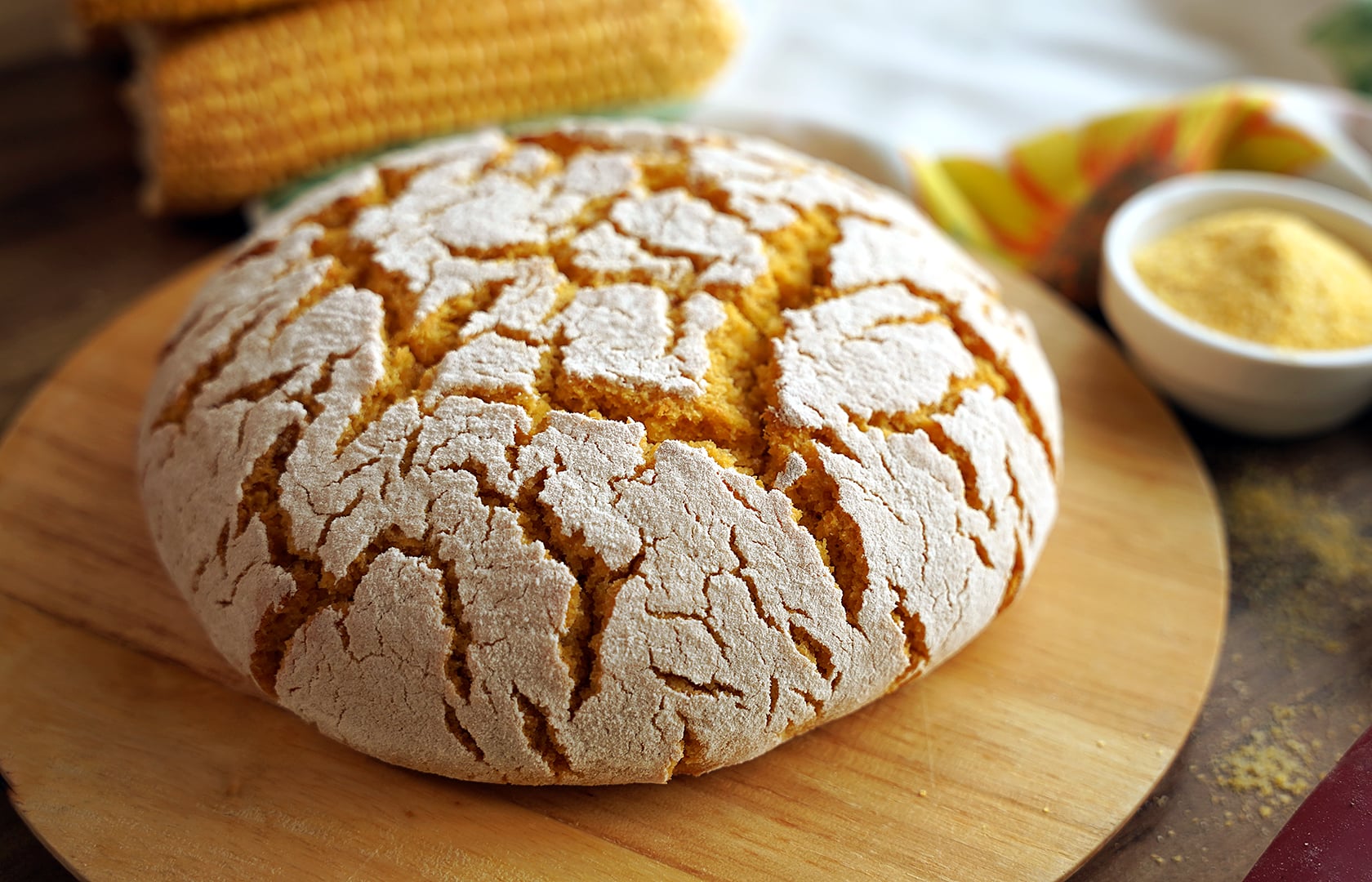
This rustic bread tells the story of Portuguese agricultural adaptation and ingenuity. Unlike simple corn breads found elsewhere, authentic broa de milho is a complex creation that traditionally combines stone-milled corn with buckwheat or rye flour in carefully balanced proportions—typically four parts corn to one part of the secondary grain. The mixture is kneaded in wooden masseiras, traditional kneading troughs that have been passed down through generations, creating a bread with a distinctive crackled crust and dense, tender interior.
A Living Tradition
The cultural significance of broa de milho extends far beyond its ingredients. In regions like Arcos de Valdevez and Avintes, this bread has earned recognition in the Slow Food Foundation's Ark of Taste, acknowledging its importance as an endangered traditional food. Local festivals celebrate the bread's heritage, with communities gathering to honor the ancient techniques that transform simple grains into this golden masterpiece.
The bread's preparation remains largely unchanged from its historical roots. The corn and accompanying grains are stone-milled and sifted before being combined with water, salt, and sometimes a touch of milk or butter. The resulting dough, dense and slightly sticky, requires no kneading in the modern sense—instead, it's shaped by hand and left to develop its characteristic flavor through slow fermentation.
Today, broa de milho continues to hold its place at Portuguese tables, particularly in rural northern communities where it serves as the perfect companion to hearty stews, robust soups, and local cheeses. Its slightly sweet, earthy flavor and substantial texture make it ideal for soaking up the rich broths of traditional Portuguese cuisine, while its keeping qualities ensured it remained a staple food for working families throughout history.
As Portugal's culinary scene evolves, broa de milho remains a testament to the enduring power of traditional foodways, representing not just sustenance, but the deep connection between land, culture, and community that defines authentic Portuguese gastronomy.