Recipes
Traditional and contemporary Portuguese cooking — from caldo verde to bacalhau, from grandmothers to Michelin chefs.
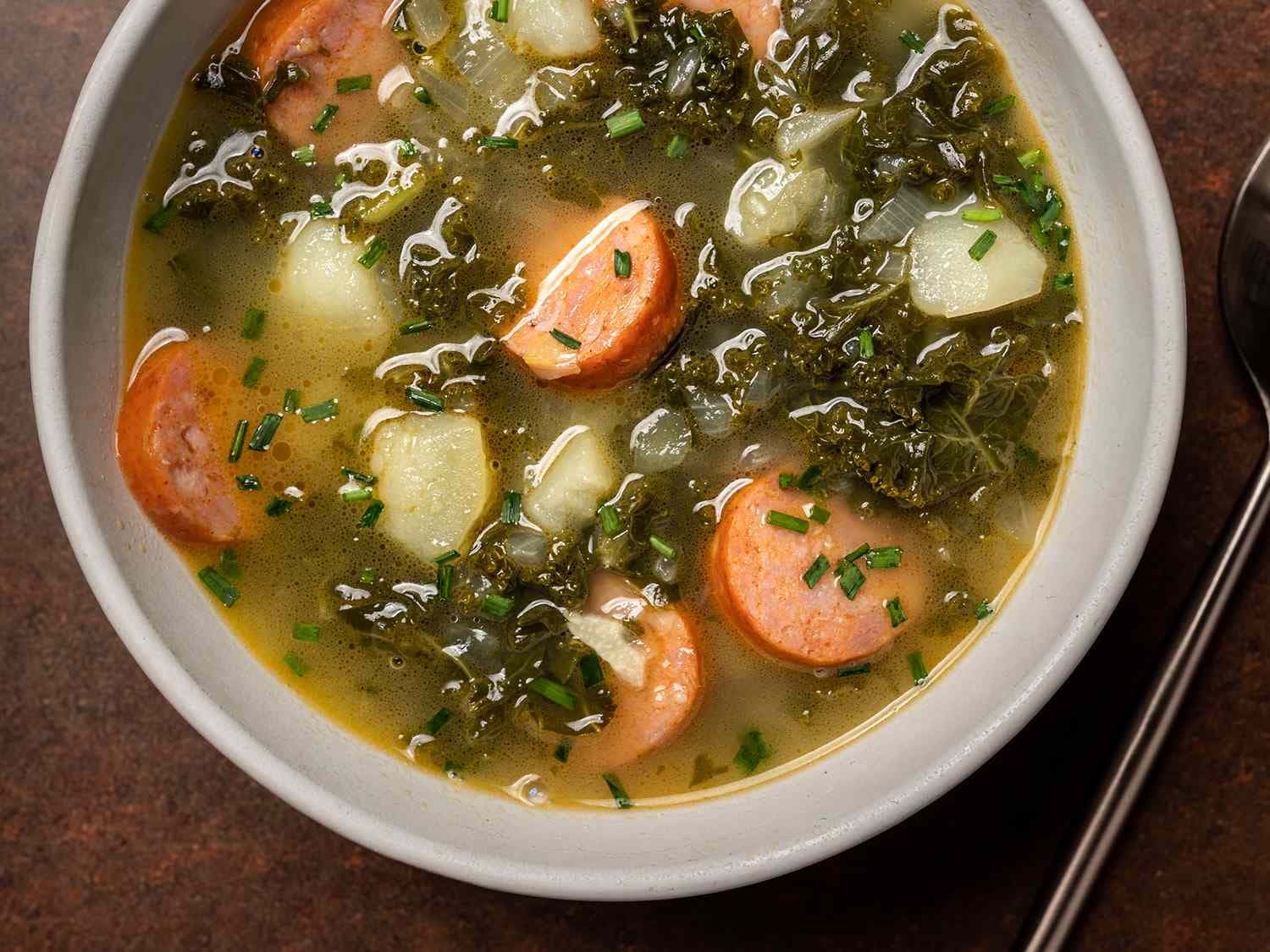
Caldo Verde is Portugal's beloved national soup, a simple yet deeply satisfying dish that embodies the essence of Portuguese comfort food. This vibrant green soup combines tender potatoes, finely shredded kale or collard greens, and smoky chouriço sausage in a harmonious blend that has warmed Portuguese hearts for centuries.Originating in the 15th century in the lush Minho region of northern Portugal, Caldo Verde was born from the ingenuity of farmers who transformed humble, readily available ingredients into something extraordinary. The soup's creation is often attributed to the influence of English merchants who brought earlier recipes to Portugal, which were then adapted using local ingredients. What began as a peasant dish has evolved into one of Portugal's most iconic culinary exports, served at everything from rustic taverns to elegant restaurants.The beauty of Caldo Verde lies in its simplicity and the quality of its few ingredients. The traditional recipe calls for Portuguese kale (couve galega), which is finely shredded into thin ribbons that cook quickly and maintain their vibrant color. The potatoes are typically mashed or blended to create a creamy base, while slices of chouriço add a distinctive smoky flavor that defines the dish. A generous drizzle of Portuguese olive oil finishes the soup, adding richness and authenticity to this timeless recipe.
Traditional



.jpg&w=2048&q=75)


.jpg&w=2048&q=75)