Pastel de Nata
The Pastel de Nata is Portugal's most iconic pastry, a sublime custard tart that has captivated palates worldwide with its perfect balance of crisp, flaky pastry and silky, caramelized custard filling. These golden gems originated in the 18th century at the Mosteiro dos Jerónimos (Jerónimos Monastery) in Belém, Lisbon, where Catholic monks created them using surplus egg yolks—a common practice in Portuguese convents where egg whites were used for other purposes like clarifying wine or starching religious habits.
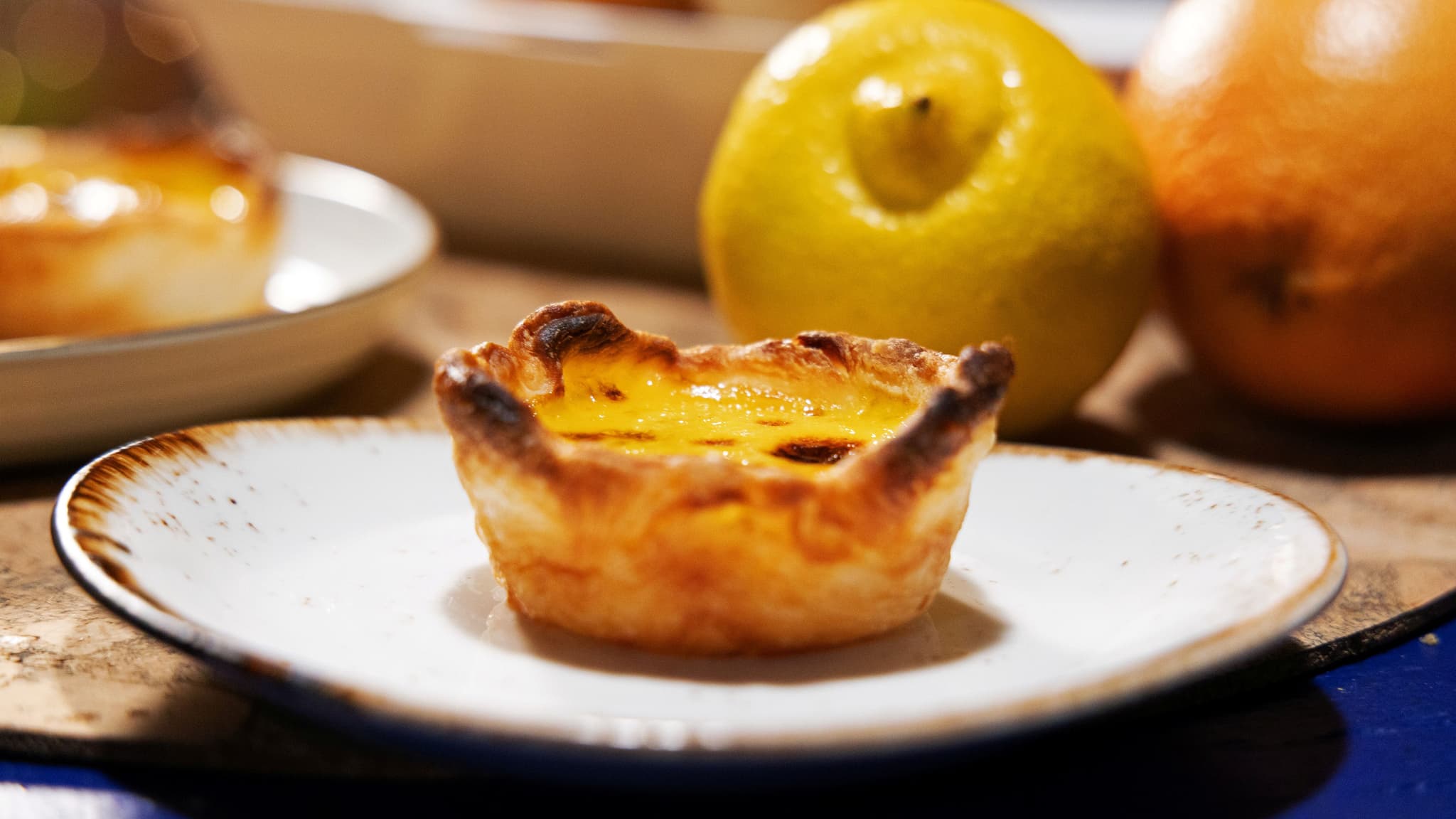
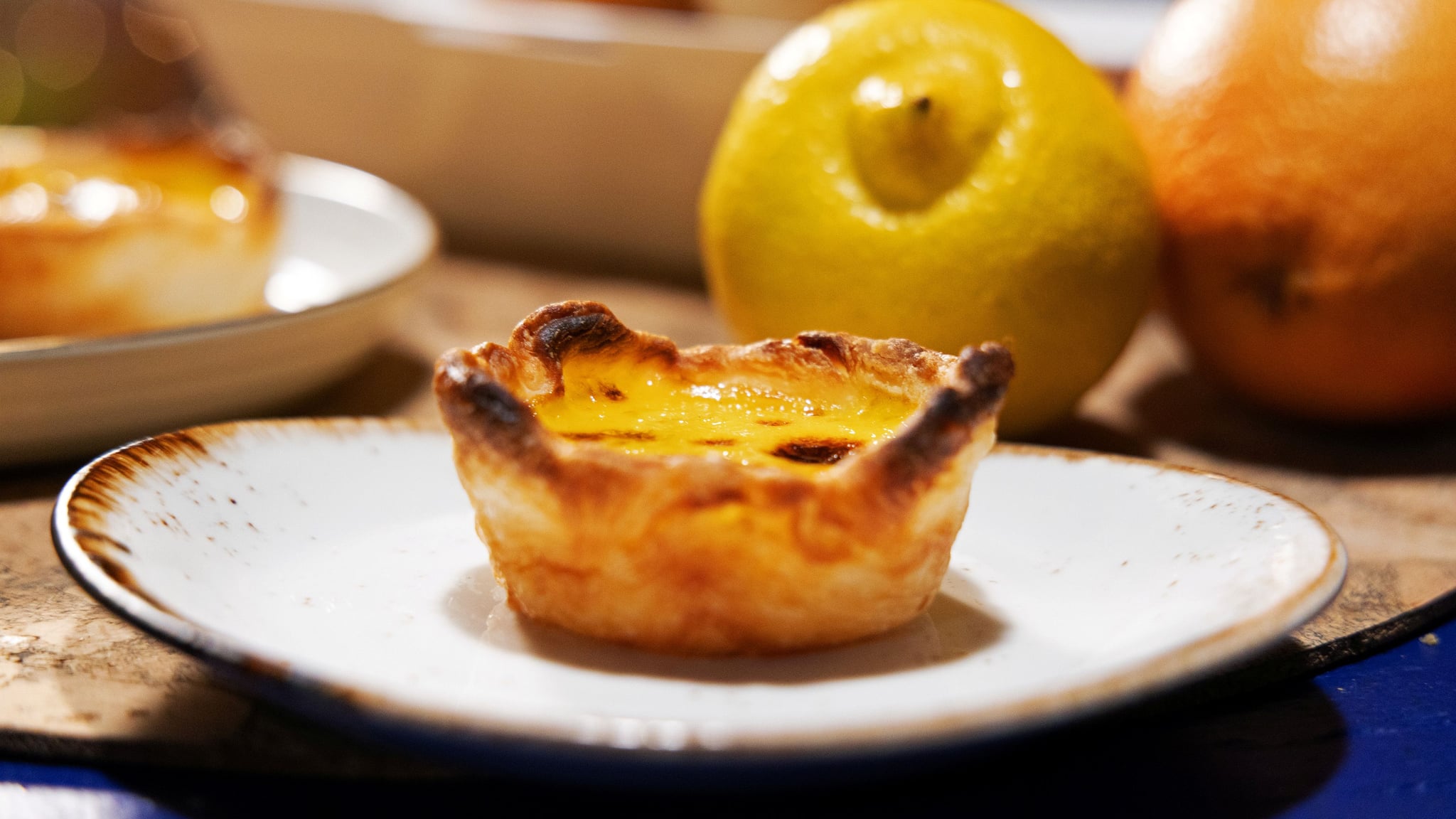
The original recipe was closely guarded by the monks until the monastery's closure in 1834, when they sold their secret formula to a local sugar refinery. This led to the establishment of the famous Pastéis de Belém bakery, which still operates today and claims to hold the authentic recipe. The pastry's distinctive characteristics include a deeply caramelized, slightly burnt top that provides a delightful contrast to the creamy custard beneath, all encased in layers of buttery, crispy pastry that shatters at first bite.
Today, Pastel de Nata represents the essence of Portuguese culinary tradition and is enjoyed throughout the day—from morning coffee breaks to afternoon treats. While variations exist across Portugal and its former colonies, the classic version remains a testament to the country's rich monastic culinary heritage and continues to be one of the most beloved symbols of Portuguese gastronomy.
Ingredients
- 250g (1 sheet) Puff pastry
- 240ml (1 cup) Whole milk
- 120ml (1/2 cup) Heavy cream
- 65g (1/3 cup) Granulated sugar
- 40g (1/3 cup) All-purpose flour
- 6 (6) Large egg yolks
- 5ml (1 teaspoon) Vanilla extract
- 1g (1/4 teaspoon) Salt
- for dusting (for dusting) Ground cinnamon
Method
- 1
Preheat your oven to 550°F (290°C). Roll out the puff pastry on a lightly floured surface and cut into 12 squares. Press each square into a muffin tin, creating small tart shells with the pastry coming up the sides. Refrigerate while preparing the custard.
- 2
In a small bowl, whisk the flour with 1/4 cup of the milk until smooth, creating a slurry. In a medium saucepan, combine the remaining milk, heavy cream, and sugar. Heat over medium heat, stirring occasionally, until the mixture begins to simmer and the sugar dissolves completely.
- 3
Slowly whisk the hot milk mixture into the flour slurry, then return everything to the saucepan. Cook over medium-low heat, whisking constantly, for 2-3 minutes until the mixture thickens to a custard consistency that coats the back of a spoon.
- 4
Remove the custard from heat and let cool for 5 minutes. In a separate bowl, whisk the egg yolks with vanilla extract and salt. Gradually whisk the warm custard into the egg yolks, tempering them slowly to prevent curdling.
- 5
Strain the custard through a fine-mesh sieve to ensure smoothness. Fill each pastry shell about 2/3 full with the custard mixture, leaving room for expansion during baking.
- 6
Bake for 10-15 minutes until the custard is set and the tops are deeply golden with characteristic dark spots. The pastry should be crisp and golden brown. Remove from oven and let cool in the pan for 5 minutes before transferring to a wire rack.
- 7
Serve warm or at room temperature, dusted lightly with ground cinnamon. The tarts are best enjoyed fresh but can be stored covered for up to 2 days.
- 8
Preheat your oven to 550°F (290°C). Roll out the puff pastry on a lightly floured surface and cut into 12 squares. Press each square into a muffin tin, creating small tart shells with the pastry coming up the sides. Refrigerate while preparing the custard.
- 9
In a small bowl, whisk the flour with 1/4 cup of the milk until smooth, creating a slurry. In a medium saucepan, combine the remaining milk, heavy cream, and sugar. Heat over medium heat, stirring occasionally, until the mixture begins to simmer and the sugar dissolves completely.
- 10
Slowly whisk the hot milk mixture into the flour slurry, then return everything to the saucepan. Cook over medium-low heat, whisking constantly, for 2-3 minutes until the mixture thickens to a custard consistency that coats the back of a spoon.
- 11
Remove the custard from heat and let cool for 5 minutes. In a separate bowl, whisk the egg yolks with vanilla extract and salt. Gradually whisk the warm custard into the egg yolks, tempering them slowly to prevent curdling.
- 12
Strain the custard through a fine-mesh sieve to ensure smoothness. Fill each pastry shell about 2/3 full with the custard mixture, leaving room for expansion during baking.
- 13
Bake for 10-15 minutes until the custard is set and the tops are deeply golden with characteristic dark spots. The pastry should be crisp and golden brown. Remove from oven and let cool in the pan for 5 minutes before transferring to a wire rack.
- 14
Serve warm or at room temperature, dusted lightly with ground cinnamon. The tarts are best enjoyed fresh but can be stored covered for up to 2 days.